the -arium
An immersive exhibition concept exploring hierarchy in artistic production
The Pitch
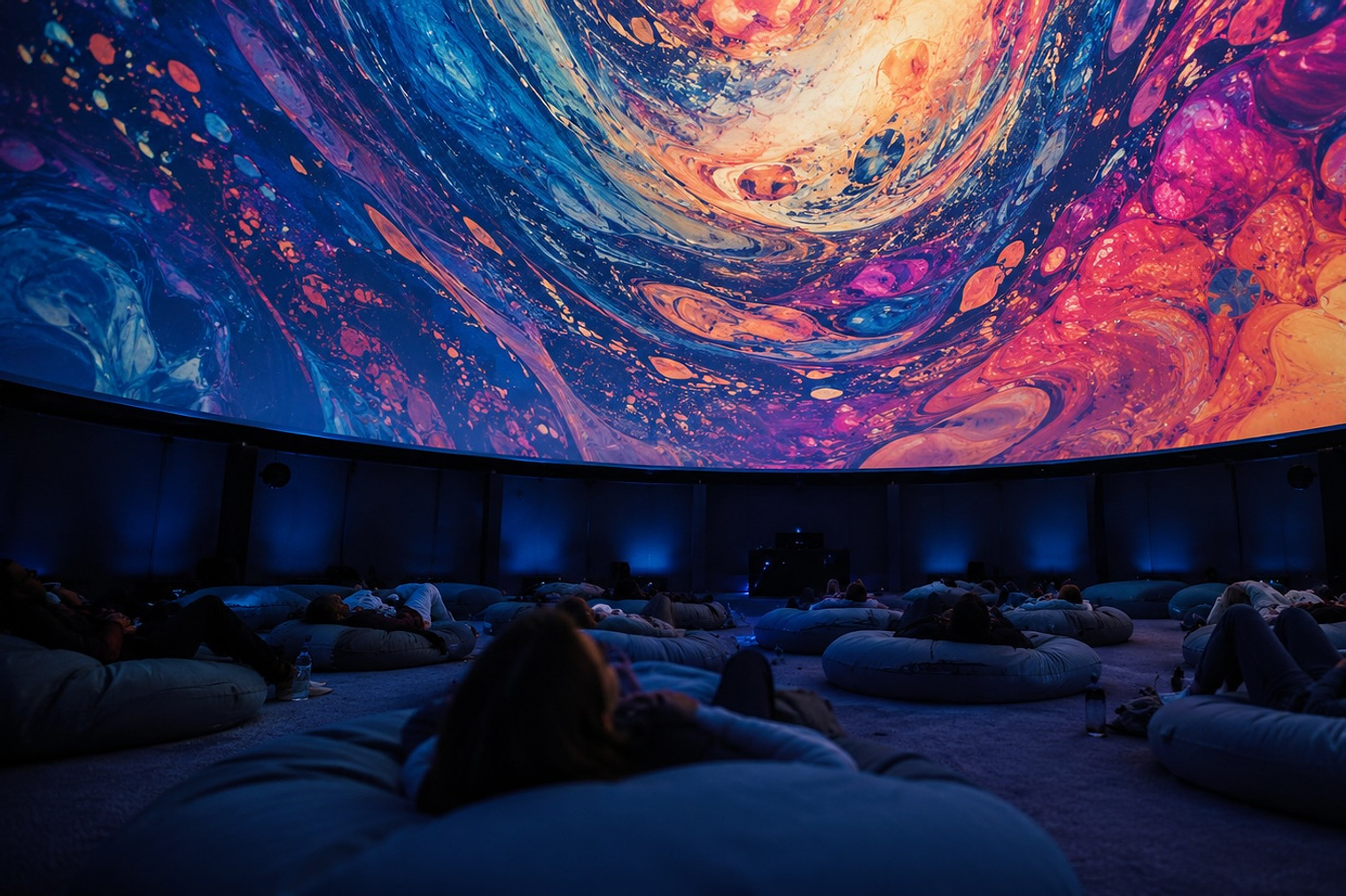
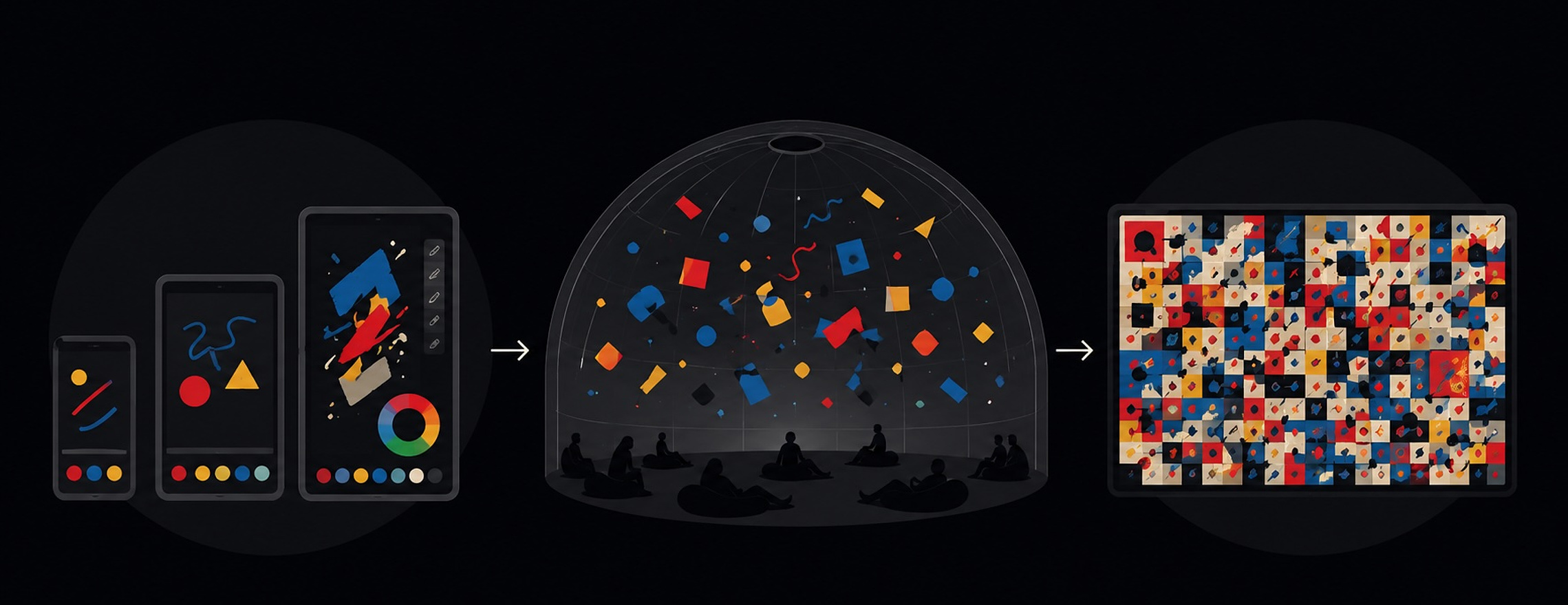
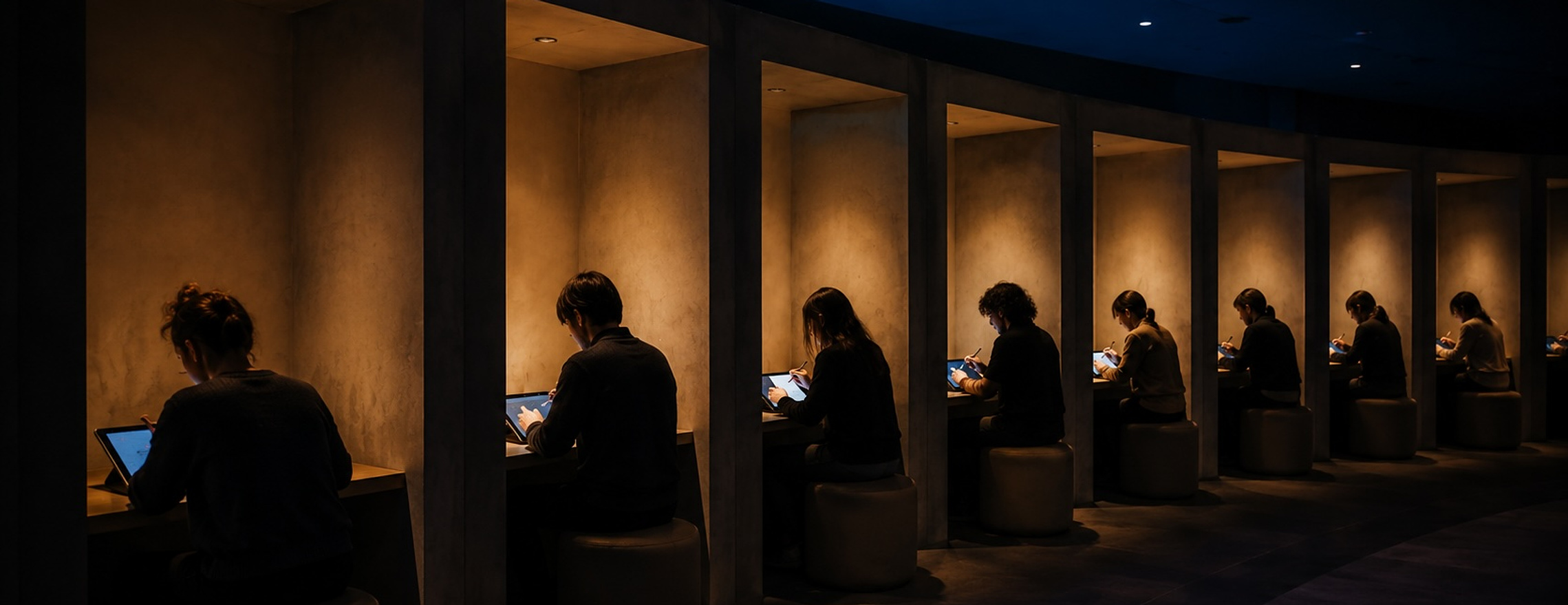
the-arium is an immersive three-stage exhibition concept built around a deliberate inversion. Visitors book a session and pay for one of three tiers of creative tools: £5 gets you a finger and primary colours, £15 gets brushes and a wider palette, £35 unlocks the full toolset. They spend fifteen minutes making digital artwork inside identical pods, with their phones locked away. Then they enter a planetarium dome where their work is projected back at them, divided into three tiers along the curved ceiling. Five minutes in, the dividing lines shatter. The hierarchy they paid into dissolves into a single collective artwork, processed by an AI system designed to redistribute visibility rather than beautify or generate.
It's a critique of how generative AI quietly embeds tiered access into creative production, designed for an audience to feel it rather than read about it.
A model of redistributed visibility, without erasing individuality
What Was Made
I designed the full visitor journey: the tiered booking system, the creation pods, the planetarium experience, and the digital commons that follows. The most interesting design problem was the AI system itself.
Most exhibitions like this would use generative diffusion to "merge" the artworks into something visually polished. I rejected that completely. Instead the system uses feature-preserving blending techniques (MixUp for equal-weight overlays, Blur for smooth transitions) borrowed from machine-learning data augmentation, not from generative AI. The point is that nothing gets generated. No artwork is altered, beautified, or redrawn. Every contribution stays visible inside the final piece, and visitors who opt in for attribution can hover over their fragment to see their name.
I also costed it as if I were going to build it: 100 drawing tablets, a one-month rental of Greenwich Planetarium, Yondr phone pouches, projection hardware, staffing. Total: £155,360. Funding routes mapped through Arts Council England, university grants, and tech sponsorship.
Why This Matters
Most generative AI tools default to making things "better." I was more interested in what happens when you remove that instinct entirely and let an AI redistribute visibility instead.
The whole experience is built on a single inversion: visitors pay for inequality at the start, and the system takes it away at the end. The hierarchy isn't critiqued from outside; it's installed, lived with, and then dismantled in front of the people who bought into it. That's the bit I most want to keep designing for. AI experiences that make people feel something structural, not just see something pretty.
What This Doesn't Resolve
The concept has a tension I haven't solved. The pitch frames the merge step and the digital commons as neutral mechanisms for redistribution, but they aren't. MixUp and Blur encode their own definition of equal. Every contribution gets the same weight, which sounds fair until you notice that "equal weighting" of unequal inputs is itself a design choice, not a politics. The £5 finger-painting and the £35 toolset don't become equal because the system averages them. They become equally visible, which is a narrower claim than the experience implies.
The digital commons piece is shakier still. Releasing the merged work as an open-source artwork is supposed to resist commodification, but "digital ownership" as it actually functions online tends to reintroduce scarcity, speculation, and new forms of exclusion almost immediately. I don't think distributing a collectible by email solves that. At best it gestures at an alternative. At worst it dresses the same logic in different clothes.
And the budget knows what it is. £155,360 isn't a real number. It's what a planetarium-scale install would cost, against funding routes sized for a small pilot. The honest version of this concept is two different projects: a £5-10k room-scale prototype that can actually be built, and a planetarium version that needs an institutional commissioner. I designed the second and costed it like the first.
If I were extending this, the work isn't more polish on the dome. It's deciding which of those two projects this actually is, and being precise about what the technology can and can't do once the lights go up.
Role: Concept, experience design, AI system logic, budget
Status: Concept / proposal
Date: 2025
Full concept deck